

International Dentist Bench Exam Guide for U.S.
A bench exam can expose a gap that years of clinical experience do not automatically close: the difference between completing a procedure and completing it to a U.S. dental school’s scoring standard. This international dentist bench exam guide is designed for internationally trained dentists who need to turn existing knowledge into precise, repeatable, exam-ready performance.
Bench exams are not simply tests of hand skills. They assess how you interpret instructions, plan a preparation, control instruments, preserve tooth structure, manage time, and present a final result that meets a defined rubric. The candidate who understands that system can train with purpose instead of relying on repetition alone.
What U.S. Bench Exams Actually Evaluate
Programs vary in their specific exercises, materials, timing, and scoring weights. One school may emphasize a particular crown preparation or Class II restoration, while another may use a different typodont, tooth number, or evaluation sequence. Yet the standards behind the score are usually consistent.
Faculty evaluators look for preparations that are biologically sound, mechanically acceptable, and visually controlled. A crown preparation may be judged on reduction, taper, margin design, finish-line continuity, clearance, wall smoothness, preservation of adjacent teeth, and overall form. A restorative exercise may be evaluated for outline form, depth, contact, anatomy, margins, and the quality of the final finish.
This is why a preparation can feel acceptable in your hand but still lose points. A small nick on an adjacent tooth, an uneven margin, insufficient occlusal reduction, or excessive convergence can carry meaningful consequences. Bench exams reward measurable quality, not just effort or familiarity with the procedure.
Start With the Rubric, Not the Bur
Many candidates begin by choosing a procedure and practicing it repeatedly. That approach has value, but it is incomplete. Before starting a timed attempt, define what a passing result looks like for each criterion.
For every exercise, identify the required dimensions, the acceptable design features, the common critical errors, and the areas most likely to be checked under magnification. If the school provides a rubric, study its language carefully. If it does not, use established U.S. dental preparation principles and seek faculty guidance that reflects real bench exam expectations.
Then convert the rubric into a preoperative plan. Know your intended reduction before touching the tooth. Decide where depth cuts will go, how you will establish the finish line, which bur sequence supports control, and how you will verify clearance and taper. A clear plan protects you from improvising under time pressure.
Train Your Eye Before You Train Your Speed
The strongest candidates do not depend only on tactile sensation. They learn to see discrepancies from several angles and to compare their work against a standard. After each preparation, inspect the occlusal surface, axial walls, margins, proximal areas, and clearance systematically.
Use the same review sequence every time. For example, assess overall reduction before focusing on margin quality, then examine taper, surface smoothness, and damage to adjacent structures. Consistent inspection creates a diagnostic habit. Without it, candidates may repeat the same error for weeks because they are evaluating their own work too generally.
Photographs can help document progress, but they are not a substitute for calibrated review. Lighting, angle, and image quality can hide a short margin or make a wall appear smoother than it is. Direct evaluation by an experienced faculty member is especially valuable when you need to understand whether a result is merely acceptable or truly competitive.
Build a Practice System That Produces Improvement
Random practice builds familiarity. Deliberate practice builds performance. Your preparation plan should include focused skill work, full procedures, timed simulations, and review cycles.
Start by isolating your limiting factor. If your margins are irregular, do not spend every session completing full preparations at speed. Spend part of the session refining bur control, hand position, vision, and margin placement. If your reductions are inconsistent, practice depth orientation and measurement before rushing into final contours.
Once a specific weakness improves, combine the components into complete procedures. At this stage, aim for consistency rather than a single impressive attempt. A bench exam requires you to reproduce an acceptable result on demand, often with unfamiliar equipment and a clock running.
A useful weekly structure may include technical drills early in the week, complete untimed procedures when learning a new design, and timed attempts after your form stabilizes. Keep a written error log. Record the defect, the likely cause, the correction you will test next time, and whether the correction worked. This prevents vague goals such as “make it better” and replaces them with objective adjustments.
The Feedback Loop International Dentists Need
Self-assessment is necessary, but it has limits. International dentists often bring strong clinical experience from systems that use different materials, preparation philosophies, teaching methods, or examination criteria. The issue is not a lack of ability. It is calibration.
Faculty feedback tells you how your work performs against U.S. standards, not simply whether the procedure appears reasonable. A detailed review should identify the exact features that cost points, explain why they matter, and give you a practical correction for the next attempt.
The most productive model follows a clear cycle: watch a clinically correct demonstration, complete the assigned procedure, submit the result for review, apply the written evaluation, and resubmit after correction. Each resubmission should test a specific improvement. If feedback identifies insufficient functional cusp reduction, for instance, the next attempt should show a deliberate change in depth-cut placement and verification, not just a faster version of the same approach.
Global Dental Elites Academy structures virtual training around this kind of faculty-led practice and evaluation cycle. For candidates preparing remotely, that accountability can reduce the uncertainty of practicing alone and help turn feedback into visible progress.
Use Feedback Without Overcorrecting
A common reaction to critique is to make a large change and create a new problem. If your taper is excessive, narrowing every wall aggressively may lead to under-reduction or an uneven path of insertion. If a margin is too light, cutting deeper everywhere can compromise conservation and continuity.
Correct one primary variable at a time when possible. Review the result against the rubric after each adjustment. This is slower than guessing, but it is faster than rebuilding poor habits across dozens of teeth.
Prepare for the Conditions, Not Just the Procedure
An excellent preparation completed comfortably at home is not identical to a passing exam performance. Bench exams add time limits, unfamiliar setups, evaluator scrutiny, and stress. Your training must eventually include those conditions.
Complete full simulations using the likely time allocation. Set out your instruments in a fixed order, work with only the items you will have available, and avoid pausing to research a step. At the end, stop when time is called and evaluate the work as it stands. This reveals whether your sequence is efficient and whether you reserve enough time for finishing and inspection.
Do not begin every session with a timer, however. Speed training too early can harden defects. First establish correct form at a controlled pace. Add time pressure when you can reliably meet the required criteria without it. The right balance depends on your starting point: a candidate with strong hand skills may need more simulation work, while someone adapting to a new preparation design may need more technical repetition first.
Manage the Details That Cost Avoidable Points
Some losses are clinical, while others come from preventable exam-day errors. Read instructions twice before beginning. Confirm the tooth, procedure, required design, time limit, and any prohibited modifications. If measurements or reduction guides are allowed, know exactly how to use them efficiently.
Maintain an organized field. Instrument selection, bur order, loupes, posture, and stable hand support affect precision more than many candidates realize. Practice with the same visual aids and ergonomic setup you intend to use when permitted. Small changes in magnification, chair position, or handpiece control can affect your result.
Finally, protect your final inspection time. A technically strong preparation can still lose points if you fail to smooth a rough margin, remove a lip, check proximal clearance, or identify an adjacent tooth injury. The final minutes should be purposeful, not rushed.
A Better Measure of Readiness
Readiness is not the feeling that you have practiced enough. It is evidence that you can produce passing-quality work repeatedly, explain the criteria behind your decisions, correct feedback quickly, and perform under realistic constraints.
Keep training until the rubric becomes part of how you see every procedure. When you can identify a defect early, make a controlled correction, and deliver the same standard under time pressure, you are no longer hoping your clinical background will carry you through the bench exam. You are preparing to earn the score your work deserves.
You May Also Like

Use this international dentist admission pathway guide to plan credentialing, bench exams, applications, and feedback-led preparation for U.S. programs.
-
-
July 27, 2026
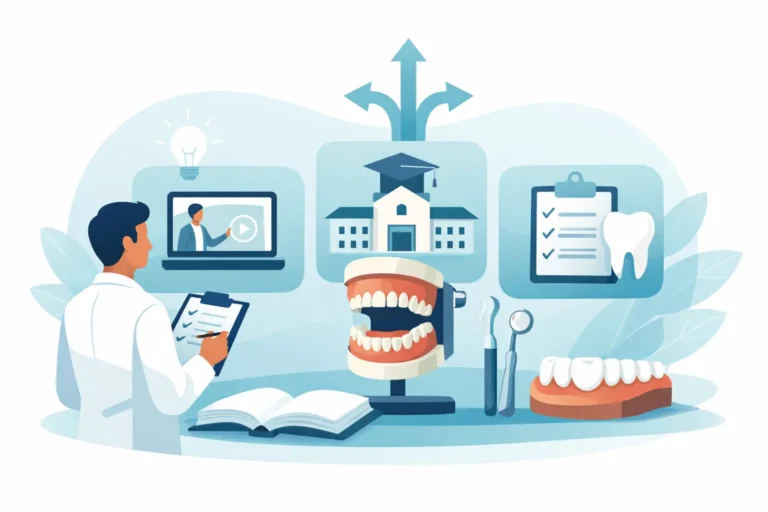
Use this bench exam course selection guide to compare feedback, curriculum, timing, and hands-on support before choosing U.S. dental training...
-
-
July 25, 2026

Learn what is bench exam evaluation, how U.S. dental schools score your work, and how targeted faculty feedback strengthens exam...
-
-
July 23, 2026