
Foreign Dentist Eligibility for U.S. Licensure
A strong clinical background does not automatically translate into U.S. practice eligibility. Foreign dentist eligibility is determined by a sequence of requirements that can include credential evaluation, English proficiency, advanced standing admission, clinical examinations, and state-specific licensing rules. Your experience matters, but U.S. programs and boards also assess whether you can meet their standards, documentation requirements, and evaluation methods.
For internationally trained dentists, the first objective is not simply to collect requirements. It is to identify the correct pathway, understand where selection decisions are made, and prepare for the parts of the process that demand measurable performance – especially the bench exam.
What Foreign Dentist Eligibility Means in the United States
There is no single national license that allows a dentist educated outside the United States to practice anywhere in the country. Licensure is issued by individual state dental boards, and every state establishes its own rules. However, most internationally trained dentists who want full clinical licensure pursue a similar route: earn a degree from a Commission on Dental Accreditation-accredited dental program, complete the required national and clinical assessments, and satisfy the specific requirements of the state where they plan to practice.
For many applicants, this means applying to an advanced standing or international dentist program. These programs place qualified foreign-trained dentists into the later years of a U.S. dental school curriculum, leading to a D.D.S. or D.M.D. degree. Admission is competitive. A dental degree from another country is the foundation, not an automatic substitute for a CODA-accredited degree.
Some states offer limited pathways for dentists with international training, postgraduate education, faculty appointments, or other specific qualifications. These options can be valuable, but they are not interchangeable with the standard pathway. Rules change, and a pathway available in one state may not exist in another. Always confirm current requirements directly with the dental board in the state where you intend to practice.
The Core Requirements to Review First
Before investing heavily in applications or exam preparation, organize the requirements that are most likely to affect your timeline. Programs may differ in the details, but applicants commonly need an evaluated dental degree, proof of English proficiency, national examination results, professional documentation, and evidence of clinical readiness.
Credential evaluation and academic records
U.S. dental schools need a clear, verified picture of your academic training. This often includes your dental diploma, transcripts, course details, and a formal credential evaluation. The evaluation converts or interprets international academic records for U.S. institutions, but it does not guarantee that every school will view coursework in the same way.
Start early. Obtaining sealed records from a university, arranging translations when needed, and completing third-party evaluations can take longer than expected. Review each program’s instructions carefully rather than assuming one evaluation package will satisfy every application.
English proficiency
If English was not the language of your dental education, many programs require an English language proficiency examination. Minimum scores vary by school, and competitive applicants often need more than the published minimum. Strong English skills also affect far more than admission paperwork: they influence interviews, patient communication, written instructions, and your ability to understand faculty feedback under time pressure.
National dental examination requirements
Most candidates will encounter the Integrated National Board Dental Examination, commonly called the INBDE, as part of their path toward licensure. Requirements can vary by program and state, including when the exam must be completed. Treat the INBDE as a separate preparation project from the bench exam. One evaluates broad integrated dental knowledge; the other assesses whether your hands can produce precise work to a defined standard.
Clinical experience, recommendations, and interviews
Admissions committees want evidence that you are prepared for the demands of U.S. dental education and clinical practice. Depending on the program, this may include letters of recommendation, a personal statement, a curriculum vitae, observation experience, interviews, and documented clinical employment.
These materials should present a coherent professional record. Explain your training and experience clearly, but do not rely on years in practice alone to demonstrate current readiness. Programs evaluate how well you can adapt to their curriculum, standards, and assessment environment.
Why the Bench Exam Often Decides the Outcome
For advanced standing applicants, the bench exam can be one of the most decisive stages of the process. It is where a school moves beyond transcripts and test scores to assess preparation design, reduction quality, margins, occlusion, contours, anatomy, time management, and attention to instructions.
This is where many capable dentists face an unfamiliar challenge. You may have completed high-quality clinical work for years, yet still lose points if your preparation does not align with the specific rubric used by a U.S. program. Bench exams reward controlled execution against measurable criteria. They do not reward speed without accuracy or clinical habits that fall outside the evaluator’s expectations.
A practical preparation, operative, or fixed prosthodontic task is judged within a narrow tolerance range. Small errors can compound: inadequate reduction may affect material space; an uneven finish line may weaken margin quality; poor taper may compromise retention; overcontoured anatomy may reduce the overall score. The task is not merely to finish. It is to finish in a way that is visibly compliant with the school’s standard.
That is why passive viewing is rarely enough. Candidates need repeated practice, objective evaluation, correction, and resubmission. Faculty-calibrated feedback can reveal problems that are difficult to identify from your own work, particularly when you have been trained under a different clinical framework.
Build a Preparation Plan Around Your Actual Gap
The right plan depends on where you are in the process. An applicant still gathering documents needs an admissions timeline. A candidate invited to a bench exam needs intensive technical training. Someone who has already completed an advanced standing degree may need to focus on clinical licensure requirements in a specific state.
Begin by separating administrative eligibility from performance readiness. Administrative eligibility includes your degree, evaluations, language scores, applications, and examination requirements. Performance readiness includes your ability to execute procedures to U.S. grading standards, explain your decisions, work within a time limit, and respond to feedback without repeating the same errors.
Then establish a realistic training cycle. Study a demonstrated procedure, perform it under exam-like constraints, photograph or submit the work for detailed evaluation, and correct the exact deficiencies identified. Repeat the cycle until your result is consistent, not occasional. One excellent preparation is encouraging. Reproducible quality is what builds confidence on exam day.
At Global Dental Elites Academy, this model is central to bench preparation: faculty-led demonstrations are paired with assignment submission, written evaluation, and structured resubmission. The value is not only seeing a procedure performed correctly. It is understanding why your work meets or misses a rubric and practicing until the correction becomes reliable.
Avoid the Most Common Eligibility Mistakes
The first mistake is treating all schools and states as if they have identical requirements. They do not. A program may require documents, test scores, or a bench exam format that differs from another program you are considering. Build a requirement tracker for each school and state, including deadlines, document rules, examination policies, and fees.
The second is delaying bench preparation until after an invitation arrives. Some programs offer limited notice, and technical improvement takes repetition. Early training does not mean practicing without direction for months. It means developing the core hand skills, understanding evaluation criteria, and creating a feedback system before the exam date becomes urgent.
The third is confusing clinical familiarity with exam readiness. In practice, dentists work with patients, assistants, different materials, and varied clinical conditions. A bench exam removes much of that context and exposes technical fundamentals. The transition requires humility, precision, and a willingness to be coached.
Finally, do not make major decisions based on informal advice alone. Online groups can provide perspective, but they cannot determine whether you meet a current program or state requirement. Use them to identify questions, then verify answers with the official institution or licensing authority.
Foreign Dentist Eligibility Is a Sequence, Not a Single Decision
Eligibility becomes manageable when you treat it as a sequence of decisions: choose the state and pathway, document your education, meet application and examination requirements, prove your clinical performance, and complete the steps required for licensure. Each stage has different standards, and progress in one stage does not eliminate the need to perform well in the next.
The most effective candidates do not wait for certainty before they begin preparing. They create a disciplined plan, verify requirements early, and train their hands to meet the standard that will be used to judge them. Your international education brought you to the starting line. Focused preparation can help you show U.S. programs exactly what you are capable of doing.
You May Also Like
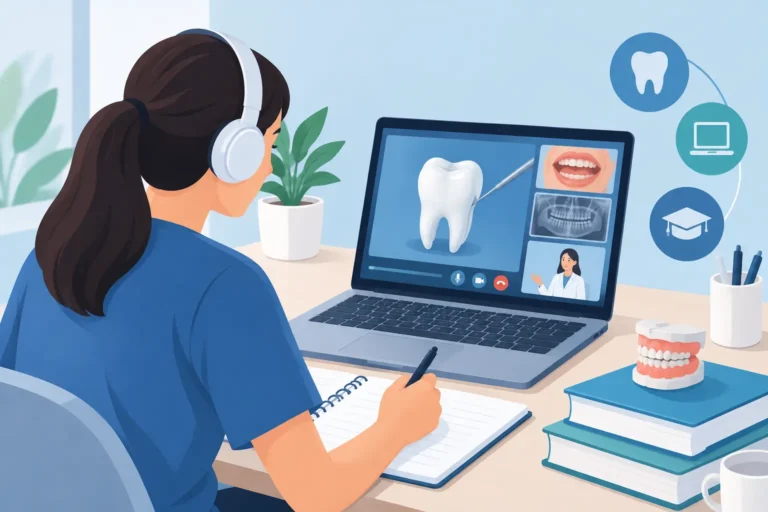
Virtual dental education for internationally trained dentists: learn U.S. bench standards, submit work for faculty review, and improve with purpose...
-
-
October 24, 2026

Are virtual bench courses effective? Learn how faculty feedback, rubric-based practice, and resubmission build U.S. dental bench exam readiness today.
-
-
October 22, 2026

An in-person dental workshop gives internationally trained dentists faculty-guided practice, realistic grading, and real preparation for U.S. bench exams.
-
-
October 20, 2026