How to Practice Indirect Vision for Bench Exams
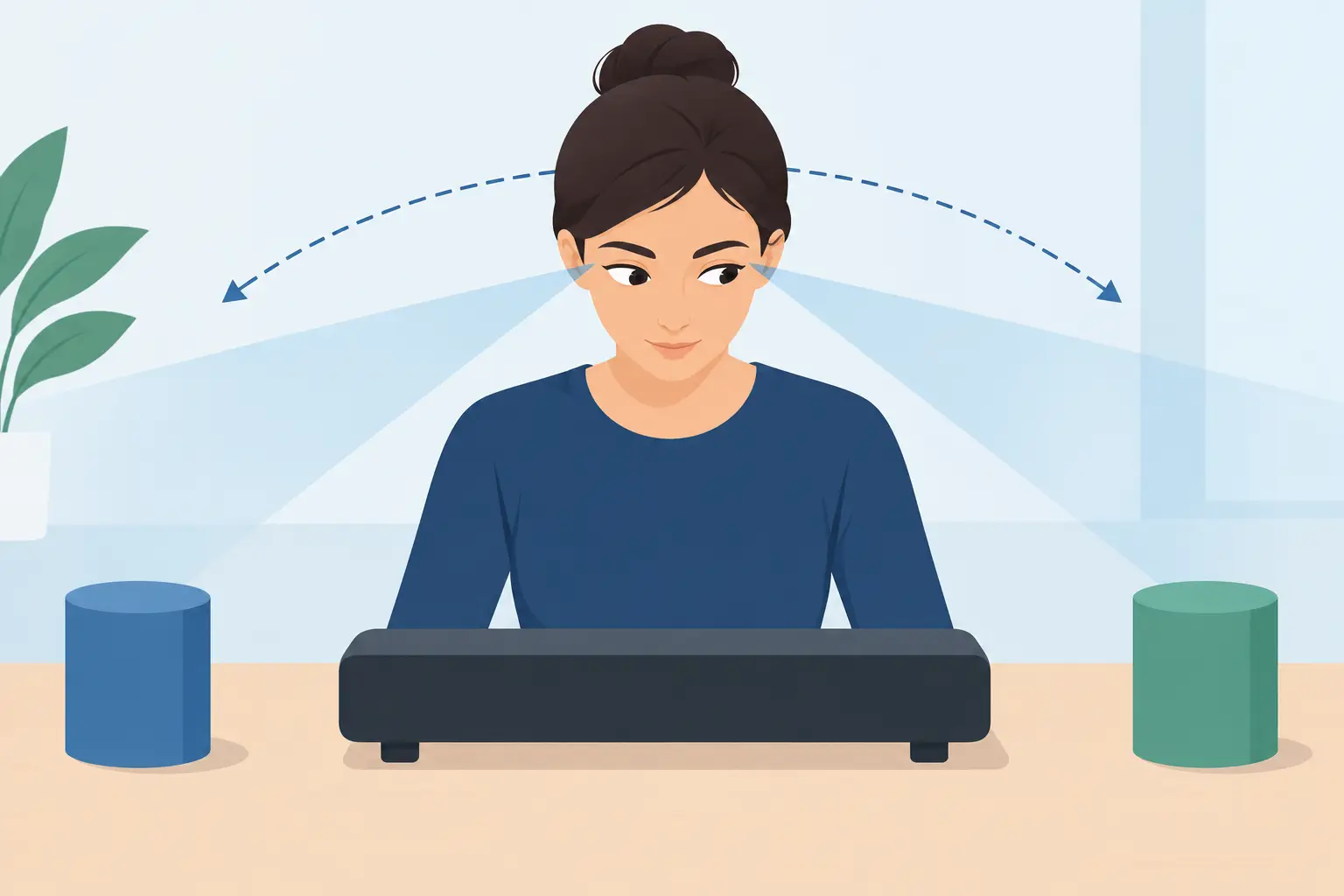
A preparation can look controlled from a direct view and still fail when evaluated from the mirror. For bench exam candidates, learning to practice indirect vision is not a minor ergonomic skill. It is a tested part of operating with control, protecting adjacent structures, maintaining proper posture, and producing work that holds up under U.S. dental evaluation criteria.
Internationally trained dentists often have strong clinical experience but may need to recalibrate how they work at the bench. U.S. programs and licensure pathways commonly assess not only the final preparation but also the disciplined technique behind it. Indirect vision helps you develop that technique. The goal is not simply to see through a mirror. The goal is to prepare accurately while your hands, mirror, bur, typodont, and body position remain organized.
Why Indirect Vision Matters on a Bench Exam
Indirect vision is essential when direct access is limited, particularly on maxillary preparations. It gives you a workable view of walls, margins, depth grooves, and proximal areas without forcing your body or handpiece into poor positions. When used correctly, it also supports retraction and illumination.
Bench exam performance depends on repeatability. A candidate who changes posture every few seconds, loses the mirror image, or repeatedly removes the handpiece to check the preparation will lose efficiency. More importantly, inconsistent viewing can lead to uneven reduction, damaged adjacent teeth, unsupported enamel, or margins that do not follow the intended design.
The challenge is that mirror work changes visual orientation. The instrument may appear to move in the opposite direction from what your hand expects. At first, this can make experienced dentists feel less precise than they are with direct vision. That frustration is normal. It is not a reason to avoid the skill. It is a reason to train it in short, deliberate repetitions.
Set Up Before You Practice Indirect Vision
Mirror control begins before the bur touches the tooth. A poor setup creates unnecessary difficulty and teaches compensations that may not serve you during an exam.
Position the typodont so the tooth can be viewed through the mirror while you maintain a neutral head and neck position. Adjust the manikin height, chair height, and working angle before starting. You should not need to twist your torso or lift your shoulder to locate the reflection. If you do, correct the setup rather than working around it.
Your mirror should provide a clear, stable image with enough of the preparation field visible to guide movement. Keep the mirror clean and dry. In a clinical setting, fogging and moisture management are additional considerations; in preclinical training, a smudged or poorly positioned mirror still creates an unreliable visual field.
Hold the mirror with a light but stable grasp. Use it actively to retract and direct light when needed, but do not allow excessive pressure or movement to change your view every time the handpiece advances. The non-dominant hand must become purposeful. It is not merely holding an accessory.
Train the Mirror Image Before Cutting Teeth
Candidates often make the mistake of practicing indirect vision only during a full crown preparation. That approach combines too many demands at once: mirror orientation, handpiece control, depth judgment, bur selection, and preparation design. Separate the skills first.
Start by placing pencil marks on a typodont tooth or a flat training surface. Through the mirror only, trace a line, follow a curve, and connect marked points with a pencil or explorer. Keep your eyes on the mirror image. Do not look directly at the working area to correct yourself.
Next, use an instrument without a running handpiece. Move a periodontal probe, explorer, or inactive handpiece along a planned path while watching only through the mirror. Practice controlled forward, backward, and lateral movement. Your objective is not speed. You are building the connection between what your eyes see and how your fingers respond.
Once these movements become less awkward, add a slow-speed handpiece or a non-cutting simulation if available. The transition should be gradual. If control disappears when the bur begins rotating, reduce the task again. Effective practice is not about forcing a difficult drill until it becomes frustrating. It is about repeating a controlled task until accuracy becomes dependable.
Use a Progression That Builds Exam Control
A structured progression is more effective than randomly practicing mirror work during every procedure. Train one objective at a time, then combine them.
Begin With Depth Orientation
For an occlusal reduction exercise, place depth orientation grooves while using indirect vision. Focus on bur position and consistency rather than completing the entire reduction. Stop after several grooves and verify whether their location and depth are uniform.
This drill teaches you to judge where the bur is entering the surface. It also exposes a common problem: candidates may unintentionally tilt the bur because the mirrored image feels unfamiliar. If the grooves are angled or inconsistent, slow down and re-establish your fulcrum.
Practice Controlled Surface Reduction
After you can place grooves reliably, connect them using light, overlapping strokes. Work in small areas rather than attempting to reduce the entire occlusal table in one continuous movement. Check reduction with the appropriate reduction guide or measurement method required by your exercise.
The mirror is not a substitute for objective verification. A surface may look smooth through the mirror while still being under-reduced or irregular. Strong bench performance combines visual control with measurement and evaluation.
Add Proximal and Axial Wall Exercises
Proximal reduction and axial preparation demand more discipline because adjacent teeth, taper, and margin placement must be managed simultaneously. Begin with limited exercises, such as refining one proximal surface or establishing one axial wall, before completing a full preparation.
Use a stable finger rest and a consistent path of insertion. Watch the bur-tooth relationship through the mirror, not just the bur itself. The question is not, “Can I see the bur?” It is, “Can I control the exact amount of tooth structure being removed?”
Finish With Complete Timed Preparations
Only after mirror drills feel stable should you perform complete preparations under time. A timer is useful because bench exams require pace, but speed should not become the primary training metric. First establish a preparation that meets the rubric. Then identify where time is being lost: mirror placement, posture changes, repeated checking, bur changes, or uncertainty during a specific reduction step.
A timed attempt without a review process can reinforce the same errors. Record your work when possible, compare the preparation against the stated criteria, and identify one or two corrections for the next attempt.
Common Errors That Limit Progress
The most common error is switching back to direct vision whenever a movement feels difficult. Direct vision can be appropriate for certain tasks depending on the tooth, arch, exercise, and access available. But if your training objective is mirror control, frequent switching prevents your visual-motor system from adapting.
Another error is moving the mirror constantly. Candidates sometimes chase the image by changing the mirror angle with every handpiece movement. Instead, establish a stable visual field and make small, intentional adjustments only when the procedure requires them.
Poor posture is equally costly. Leaning forward, rotating the neck, or elevating the shoulder may seem to improve access for a moment, but it usually reduces endurance and fine control. A bench exam can expose this quickly. Fatigue increases, your fulcrum becomes less stable, and preparation quality declines late in the session.
Finally, do not judge success only by whether you finished. Evaluate the preparation for reduction, taper, margin integrity, smoothness, adjacent tooth protection, and overall geometry. Indirect vision is valuable because it supports better execution, not because it is a separate performance trick.
Build Feedback Into Every Practice Session
Mirror skills improve faster when the feedback is specific. After each exercise, identify the exact reason an error occurred. Was the mirror angle unstable? Did your handpiece lack a firm rest? Did you lose orientation at the proximal surface? Was your reduction uneven because you relied on appearance instead of measurement?
This level of review matters for internationally trained dentists preparing for U.S. standards. Broad feedback such as “be more careful” does not tell you what to repeat. Faculty-calibrated feedback can connect a visible outcome to a correctable technical cause, then guide a focused resubmission cycle. That is the type of disciplined practice approach emphasized at Global Dental Elites Academy.
Keep a simple practice record with the tooth, procedure, mirror-view objective, error observed, and correction for the next attempt. Over several sessions, patterns become clear. You may find that your occlusal reduction is controlled but your proximal approach becomes unstable, or that your preparation quality drops only when you introduce a timer. Those patterns should determine your next drill.
Make Indirect Vision a Routine, Not an Emergency Skill
Practice indirect vision in short sessions several times per week rather than reserving it for occasional full preparations. Ten focused minutes of mirror tracing, groove placement, or axial wall refinement can be more productive than one long session performed without evaluation.
As your control improves, the mirror image stops feeling reversed and starts feeling informative. That shift is earned through deliberate repetition, stable posture, objective checks, and feedback tied to the exam rubric. Train the mirror before exam day so it becomes one less variable between your preparation and the standard you are prepared to meet.
You May Also Like

Understand foreign dentist eligibility for U.S. licensure, advanced standing programs, and bench exams with a focused, standards-based preparation plan.
-
-
October 26, 2026
Virtual dental education for internationally trained dentists: learn U.S. bench standards, submit work for faculty review, and improve with purpose...
-
-
October 24, 2026

Are virtual bench courses effective? Learn how faculty feedback, rubric-based practice, and resubmission build U.S. dental bench exam readiness today.
-
-
October 22, 2026