
Bench Course Versus Tutoring: What Builds Readiness?
A bench test can expose a gap that years of clinical experience do not always reveal: the preparation may be functional, but it may not be calibrated to the evaluator’s standard. When weighing bench course versus tutoring, internationally trained dentists should look beyond convenience and ask a more useful question: which format will help me repeatedly produce work that meets U.S. dental school bench exam criteria?
The answer depends on your current skills, the exam you are targeting, and the type of correction you need. A course and tutoring can both be valuable. They solve different problems, however, and the wrong fit can leave you practicing for hours without clear evidence that your preparations, reductions, margins, contacts, and contours are improving in the way an evaluator expects.
Bench Course Versus Tutoring: The Core Difference
A structured bench course is built around a defined training system. It typically teaches procedures in sequence, demonstrates standards visually, assigns practical work, and uses feedback to move the learner through repeated improvement. Its strength is consistency. You are not simply receiving advice when a problem appears; you are learning a repeatable method for diagnosis, preparation, execution, and self-evaluation.
Tutoring is more individualized. A tutor can focus immediately on a specific weakness, such as taper control, functional cusp reduction, Class II proximal contact, or indirect vision. For a candidate with a narrow technical problem and a clear understanding of the exam requirements, this can be highly efficient.
The distinction matters because bench exams do not reward isolated improvements alone. They evaluate whether you can execute multiple criteria under time limits and maintain judgment across different procedures. A candidate who fixes one margin in a tutoring session but lacks a reliable workflow may still struggle when the next typodont, preparation design, or time constraint changes.
What a Bench Course Provides
A strong bench course creates an organized path from demonstration to performance. Rather than relying on memory from a single session, you can revisit faculty-led videos, observe the procedural sequence, and compare your work with stated criteria. The best programs do not stop at content access. They require submission, provide written evaluation, and allow resubmission so that feedback becomes an actual correction cycle.
This structure is particularly valuable for dentists adapting to U.S. grading expectations. You may know how to perform a procedure clinically, yet still need to learn what an admissions committee or bench examiner sees first, what errors reduce a score, and where acceptable clinical variation becomes an exam-level deduction.
A course also helps prevent uneven preparation. Many candidates naturally practice the procedure they enjoy and avoid the one that exposes weakness. A structured curriculum places each procedure into a broader plan, helping you build readiness across preparations, restorations, morphology, occlusion, and evaluation standards.
What Tutoring Provides
Tutoring offers direct attention and flexibility. If you are close to your exam date and need help interpreting a particular result, a focused session may help you identify the next correction quickly. It can also be useful when you learn best through live discussion, need accountability, or have an unusual gap that does not fit neatly into a standard lesson sequence.
Its limitation is that the quality of the experience depends heavily on the tutor, the clarity of the feedback, and what happens after the session. General encouragement is not enough. “Make it smoother” or “reduce more” does not tell you where the error begins, how to measure the correction, or whether the revised result now meets the target standard.
Tutoring can also become expensive if every new problem requires another appointment. Without an organized curriculum and a way to review prior instruction, candidates may repeat the same questions instead of developing independent judgment.
The Feedback Question Is More Important Than the Format
For high-stakes bench preparation, the most important feature is not whether instruction is live or recorded. It is whether your work receives specific, criterion-based evaluation.
Effective feedback identifies what is correct, what falls below standard, why it matters, and what to change on the next attempt. For example, feedback on a crown preparation should go beyond saying that the taper is excessive. It should point to the walls or areas creating the issue, relate the finding to retention and exam expectations, and direct the candidate toward a measurable correction.
This is why submission and resubmission matter. Watching an excellent demonstration can improve understanding, but understanding is not the same as execution. You need to prepare the tooth, receive faculty review, revise the work, and compare the result against the original. That loop is where technical habits change.
At Global Dental Elites Academy, this principle is built into the training model through faculty-led demonstrations, assignment submissions, written evaluations, and structured resubmission rounds. The objective is not passive exposure to procedures. It is disciplined improvement against U.S. dental standards.
When a Bench Course Is Usually the Better Choice
A bench course is often the stronger option when you are early or midway through preparation, when you need exposure to several procedures, or when you are uncertain how U.S. bench exams are graded. It is also well suited to candidates who need flexibility to train around work, family, or time-zone demands while still following a defined plan.
Choose a course when you need to build the full system: hand skills, preparation design, exam workflow, error recognition, and repeated calibration. This is especially true if your prior clinical training used different materials, terminology, instrumentation, or standards of evaluation.
A course can also offer better value when it includes meaningful faculty feedback. A video library alone is not necessarily a training program. Look for clear deliverables: which procedures are demonstrated, how many assignments can be submitted, who evaluates the work, what type of written feedback is provided, and how quickly you can use that feedback to continue training.
When Tutoring May Be the Better Choice
Tutoring may be the right choice if you already have a reliable foundation and can identify one or two precise weaknesses. Perhaps your posterior composite anatomy is consistently flat, your crown prep margins need refinement, or your speed drops significantly during a timed exercise. In these cases, an experienced instructor can help you diagnose a targeted issue without requiring a full curriculum.
It can also complement a course. A candidate may use a structured program to learn procedures and submit work, then schedule limited one-on-one support for a persistent technical barrier or a final mock-exam review. This combination works best when the tutoring reinforces an established framework rather than replacing one.
Be cautious if tutoring is your only plan and you have not yet completed enough independent practice. A live session can create a sense of progress, but the bench exam will test what you can reproduce alone, under pressure, with the clock running.
How to Make the Decision Before You Invest
Start with an honest skills audit. Can you name the evaluation criteria for each procedure you expect to perform? Can you assess your own work before anyone else comments? Can you complete the procedure within a realistic time limit while preserving the details that earn or protect points?
If the answer is no across several areas, a structured bench course will likely give you the stronger foundation. If your answer is yes except for a defined issue, tutoring may provide the focused support you need.
Then examine the training method, not just the marketing language. Ask whether the instruction is exam-specific, whether feedback comes from qualified faculty, and whether you will have the opportunity to correct and resubmit your work. Also consider access to realistic practice conditions. Some candidates benefit greatly from limited-seat, in-person training because it exposes how their technique holds up when faculty observation, equipment, timing, and exam pressure are present.
Finally, choose the format you will use consistently. The most detailed course will not help if you never submit assignments. The best tutor cannot correct work you do not practice between sessions. Bench readiness is built through deliberate repetitions, careful evaluation, and the willingness to remake work that is merely acceptable until it is genuinely exam-ready.
Your preparation should leave you with more than a collection of tips. It should give you a dependable process: recognize the standard, execute the procedure, evaluate the result, correct the deficiency, and perform again with confidence.
You May Also Like

Understand foreign dentist eligibility for U.S. licensure, advanced standing programs, and bench exams with a focused, standards-based preparation plan.
-
-
October 26, 2026
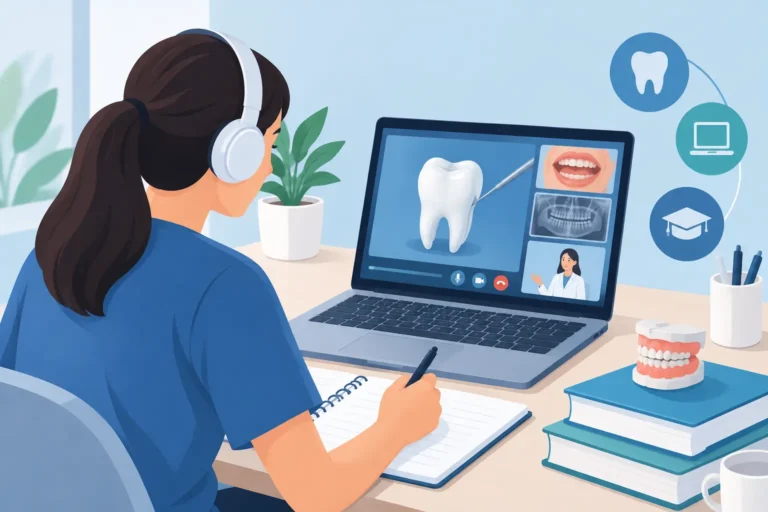
Virtual dental education for internationally trained dentists: learn U.S. bench standards, submit work for faculty review, and improve with purpose...
-
-
October 24, 2026

Are virtual bench courses effective? Learn how faculty feedback, rubric-based practice, and resubmission build U.S. dental bench exam readiness today.
-
-
October 22, 2026